What Is Virtual Reality? Find Out How To Enjoy a Reality Show in VR
What Is Virtual Reality? Find Out How To Enjoy a Reality Show in VR Virtual…
What Is Virtual Reality? Find Out How To Enjoy a Reality Show in VR
By Jamie Reyes, Hosted weekly VR watch parties since 2023
Last reviewed: April 2, 2026
Key Takeaways
- VR gives reality TV fans a social, genuinely immersive viewing experience that a flat screen simply can't match.
- To watch reality TV in VR, you need a standalone headset or phone-based viewer, a social VR platform like Horizon Worlds or VRChat, and YouTube VR for 360-degree content.
- VR reality shows come in three formats: 360-degree episodes, multi-camera spatial replays, and group watch rooms with live streams.
- The "Proximity Loop" describes the emotional shift VR creates, where viewers feel physically present with the cast, which deepens engagement in a way regular TV doesn't.
- Standalone headsets are the best starting point for most viewers: comfortable, simple, and ready straight out of the box.
- The three most common mistakes are overbuying on hardware, underestimating headset comfort, and streaming on a weak connection.
VR isn't just for gamers, reality TV fans get the social front row
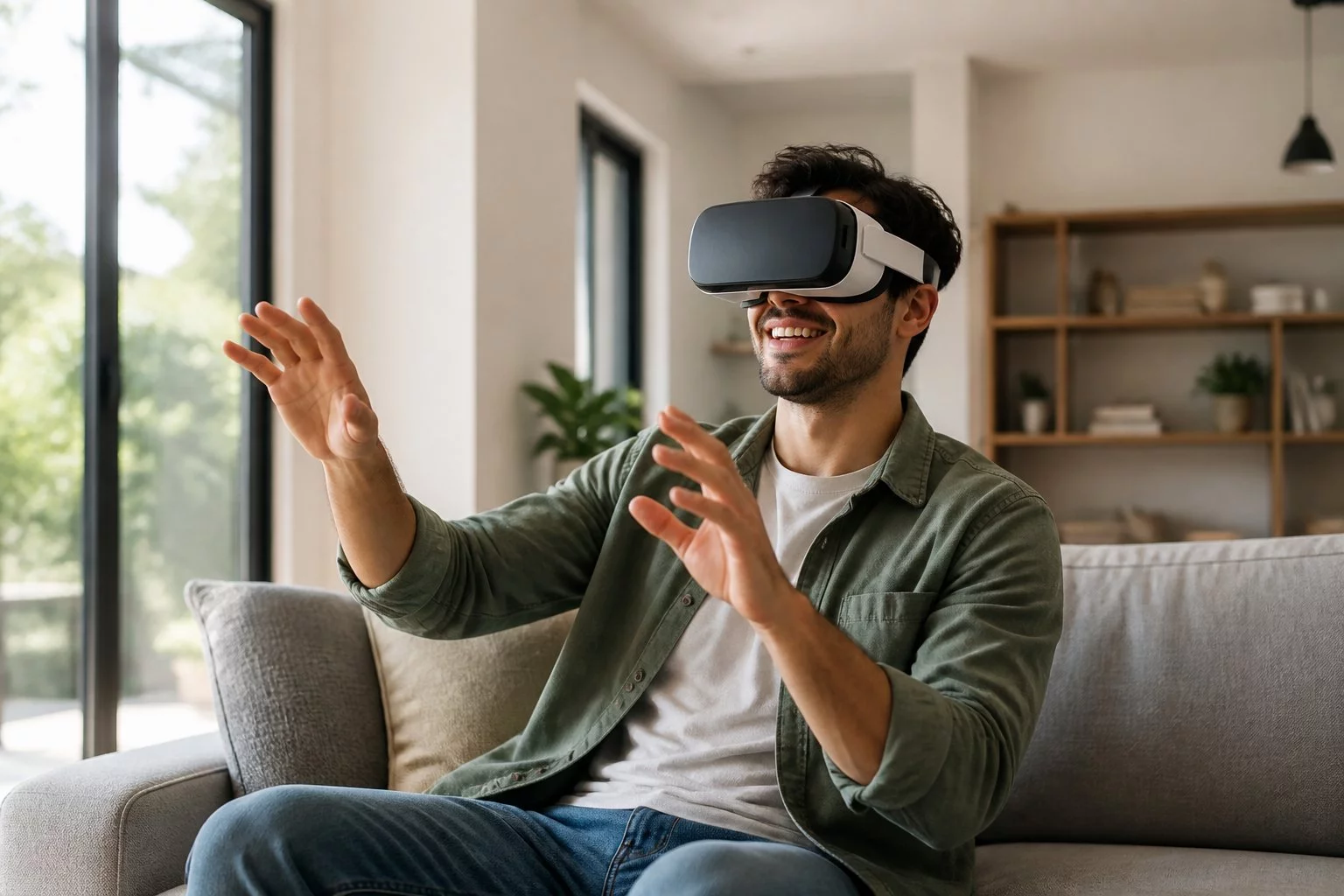
Put on a headset and you're no longer watching a confession scene from your couch, you're standing next to the contestant during it, close enough to catch every micro-expression. That shift in proximity genuinely changes how you follow the drama.
Reality TV is actually one of the strongest formats for VR. The whole genre runs on emotional reaction and social tension, and both land harder when a scene wraps around you rather than sitting framed on a flat screen across the room.
In a weekly watch party of around ten people, reactions come from all around the virtual space and you can hear exactly where each one originates, left, right, behind you. It feels less like watching a show together and more like being in the same room for it. That spatial audio detail alone justifies the setup.
Before you spend anything on hardware, try borrowing a friend's standalone headset first. The experience tends to sell itself in about five minutes.
Quick Answer
What is virtual reality, and how do you watch a reality show in VR? Virtual reality places you inside a fully surrounding environment that responds as you look around, creating a genuine sense of presence that a flat screen can't replicate. To watch a reality show in VR, open YouTube VR for 360-degree episodes or join a social VR platform like Horizon Worlds or VRChat for a group watch party with friends.
How to watch now, three steps:
- Charge a standalone headset fully before guests arrive.
- Open YouTube VR or create a social VR room and share the invite link.
- Test audio levels and confirm your connection speed clears 25 Mbps.
What virtual reality is, and how reality shows feel in VR
Virtual reality is a headset you wear that places you inside a digital space you can look around in every direction. For reality TV, that means you're not just watching the drama, you're standing on set, seated in a virtual room with friends, or surrounded by 360-degree footage where the action plays out all around you. It's a sense of presence a flat screen simply can't match.
Reality-show VR comes in three main forms:
- 360-degree video episodesfull episodes or excerpts filmed in 360 degrees, viewable on platforms like YouTube VR.
- Multi-camera spatial replaysexperimental formats that let you switch angles inside a scene; still rare for mainstream titles.
- Social rooms with virtual screens and avatarslive streams play on a giant virtual screen while your group watches together as avatars, using social VR platforms like Horizon Worlds or VRChat.
Official 360 content for mainstream shows is still limited. YouTube VR and authorized platform excerpts are your most reliable legal sources. Loading a 360 episode on a standalone headset is the fastest way to understand what the experience actually feels like.
What you need depends on what you want. Casual viewers do fine with an affordable standalone headset. If you're regularly hosting VR watch partiesa mid-tier model with better comfort and spatial audio is worth the step up, those two things decide whether your friends come back the following week.
Why you feel "there": the presence psychology behind VR
Your brain reads scale, sightlines, and directional sound as signs that you're physically close to something. In a 360-degree environment, those cues suggest you're sharing space with the cast. A whisper over your left shoulder triggers an instinctive head turn, the kind of reaction a flat screen never produces.
Think of it as a front-row effect. VR recreates the perceptual signals of being physically present, so the cast feels nearby even when you're on the couch at home. Field of view and spatial audio are the biggest contributors to that feeling, and worth checking first when comparing headsets.
Most people don't anticipate that reaction from themselves. The head-turn instinct catches first-timers off guard every time.
The Proximity Loop: how VR changes the way you actually watch
The "Proximity Loop" describes the mental shift that happens when you stop watching a flat screen and start occupying the same digital space as the cast. It's an informal, observational term drawn from hosting weekly watch parties, not an academic label.
The effect is real, though. Attention sharpens, emotions land harder, and small social cues, a glance, a side-eye, a muttered aside, register in a way they rarely do on regular TV. Post-episode conversation gets richer too. Build viewing nights around episodes heavy on interpersonal tension rather than big set pieces, and choose apps that let you pause, reorient, and rewind 360-degree footage while friends are present.
One thing most people don't anticipate: the virtual space matters as much as the content itself. A poorly designed social room with muddy audio kills the experience faster than a mediocre episode ever could.
From unboxing to the front row: the steps that actually matter
Step 1, Hardware selection. Standalone headsets offer the lowest friction and suit most social watch-party needs. PC-VR delivers sharper visuals but adds cables, setup time, and cost. Most casual hosts try it once and return to standalone.
Step 2, App installation. Install a social VR app, Horizon Worlds or VRChat are solid starting points, plus a 360-degree player like YouTube VR. Run through onboarding and join a demo room to confirm audio and mic permissions before the night. Skipping that step is how watch parties fall apart in the first ten minutes.
Step 3, Finding rooms and 360 episodes. Search inside your chosen app using the show name or broad terms like "watch party" or "360 reality." Naming the show explicitly surfaces better results than relying on generic tags.
Step 4, Inviting friends. Create a private room or event and share the platform invite code or link. Test it with one friend beforehand, that single step avoids most common problems on the night itself.
Headset tiers at a glance
- Standalonecomfortable, plug-and-play models that handle 360-degree streams with minimal setup; the right choice for most viewers.
- Mid-rangelighter builds with better straps and spatial audio, ideal for hosts running longer or recurring sessions.
- PC-VRhigher fidelity but often overkill for pure streaming; worth it only if you're also using interactive or VR-native content.
Invite scripts, troubleshooting tips, and finding 360 content
For a non-tech friend: "Hey, want to try something different? Put on a VR headset and I'll send you one-click access to a private room. We'll sit on a virtual couch and watch the latest episode together." Keep it short and promise to walk them through setup when they arrive, that reassurance lands better than any technical rundown.
For technical troubleshooting: If you hit buffering, close background apps, switch to 5 GHz Wi-Fi, and drop the player resolution one notch. If audio cuts out, re-run the headset's audio calibration, then mute and rejoin the room.
Finding 360 reality content: Search YouTube VR or your social app using the show name plus "360 video, 360 episode," or "360 watch party 4K", for example, "Survivor 360 video" or "RuPaul 360 episode." This surfaces better-quality uploads and active community rooms. Stick to official channel uploads or rights-holder content; pirated copies get pulled regularly and carry real legal risk.
One practical note: automatic recommendations can quietly serve lower-resolution versions of the same content. Searching manually with a specific title and "360" consistently turns up better results.
Apps and the invite flow
- Social VR platforms: Horizon Worlds and VRChat both support private rooms with moderation controls, useful when hosting a group.
- Content players: YouTube VR handles most 360-degree uploads cleanly; a standalone 360 player app works well for local files.
- Reliable invite pattern: the host creates a private room, copies the invite code or link, sends brief setup instructions with a test time, and lets guests complete onboarding before the event starts.
Starter setups and meaningful upgrades
You don't need expensive gear to feel genuinely present. A budget standalone headset, or even a phone-based viewer, paired with YouTube VR delivers a real sense of immersion for minimal cost. Entry-level hardware is enough for a first session. Don't overthink it.
If you're hosting regularly, the upgrade that actually moves the needle is a mid-range standalone with good spatial audio and a stable 5 GHz connection. Comfort and reliable connectivity beat raw display specs almost every time for a group watch, that's where the money is better spent.
Common mistakes that kill the experience
Buying an overpowered PC-VR rig for simple streaming. Visual fidelity returns diminish fast for reality TV content. Unless you're also running VR-native games, it's overkill, and the setup time reflects that.
Underestimating bandwidth. Stutter breaks the feeling of shared presence far more than slightly lower resolution ever would. A practical guideline from testing: aim for around 25 Mbps stable download for 4K 360-degree streams, though actual requirements vary by platform. Run a speed test before guests join.
Ignoring comfort ratings. Heavy headsets and poorly balanced straps cause fatigue faster than most people expect. Prioritize light weight, a balanced strap, and replaceable facial cushions. Around 60–90 minutes is a reasonable session ceiling for most users; individual tolerance varies.
Most people who struggle their first time aren't the least technical in the room, they're the ones who tried to perfect everything before inviting anyone. Early sessions are rarely polished, and that's fine.
What actually caught us off guard
Phone-based viewers held up better than expected for a first session. The real surprise was how quickly budget headset foam padding degrades, replaceable cushions aren't a luxury, they're a practical necessity after a handful of uses.
Platform invite links were less reliable than advertised. On one platform, links expired ahead of schedule. On another, guests had to accept a friend request before a room link would register at all. Neither issue appears in any official setup guide.
Audio sync stayed stable across most setups, but one standalone headset's Bluetooth pairing reset mid-session without warning. Wired audio remains the more reliable choice for longer watch parties, even if it's less convenient.
Pre-watch checks: what to test before your first party
Internet check: run a speed test and confirm at least 25 Mbps stable download. If speeds look marginal, restart the router or switch to a wired connection before assuming the platform is the problem.
Headset check: run the built-in calibration, then test audio and fit with a short 360-degree clip. A minute or two practicing head movements means navigation feels natural when guests arrive.
Community check: drop into a public room once to confirm your search terms surface active watch parties and that invite links actually work. A quick two-person dry run before the main event prevents awkward freezes in front of a full group.
Which VR reality-show setup should you choose?
Frequency: watching once or twice, a budget standalone headset is all you need. Running a weekly VR watch party changes the math, comfort and spatial audio matter more than most people expect, and even a modest upgrade pays off quickly in less setup friction and fewer mid-session dropouts.
Social scale: for private nights with friends, pick an app with private rooms and host controls. For public drop-in viewing, platforms like VRChat or Horizon Worlds offer better discoverability, though private rooms tend to produce a better atmosphere with far less moderation overhead.
Quality versus friction: if your goal is feeling genuinely present in the room with everyone else, prioritize audio quality and field of view over raw pixel count. Reliable connectivity and comfort beat peak resolution for most reality-show viewers, every time.
Here are typical US street prices as of April 2, 2026. Prices vary by retailer and shift during sales, treat these as ballpark figures:
- Phone viewer: ~$10–$50, lowest barrier, fine for a one-off test
- Budget standalone headset: ~$100–$250, solid for occasional use
- Mid-range standalone headset: ~$250–$500, the sweet spot for weekly watch parties
- PC-VR headset + capable PC: $800+, peak resolution, but overkill for most social viewing
It comes down to three profiles. Casual viewers who drop in occasionally will get everything they need from a budget standalone. Weekly hosts should step up to a mid-range headset with a comfortable fit, spatial audio, and a stable 5 GHz connection, those three factors matter far more than resolution. PC-VR is only worth the spend if you're also pursuing interactive, VR-native content well beyond reality TV.
One final thing worth checking before upgrading any hardware: your Wi-Fi. More than one viewer has spent weeks agonizing over headset specs, only to discover the router was the actual bottleneck all along.
Frequently Asked Questions
Can I watch current broadcast reality shows in VR legally?
Most major reality shows don't have official 360-degree versions yet. Your best legal options are YouTube VR and licensed clips on social VR apps that publish authorized content. The selection is limited for now, but it's steadily growing.
Will VR make me motion sick, and what helps?
It can, especially at first, but it's usually manageable. Start with short clips, stick to content filmed from a steady camera at head height, and avoid anything with fast or jerky movement. Most people adjust within a session or two. If you feel off, take the headset off and give yourself a few minutes before going back in.
Can people without headsets join a VR watch party?
Yes. If your hosting app supports mixed viewers, friends without headsets can join as standard 2D participants. Share a direct stream link and pair it with a separate group chat, and they'll stay part of the conversation without missing anything.
What's the cheapest way to try a reality-show VR watch party tonight?
Just use your phone and YouTube VR, no headset required. Find a 360-degree trailer, spend ten minutes inside it, and you'll have a clear sense of whether the format works for you before spending anything.
How do I host a private room and control who talks or shares links?
Set the room to invite-only inside your social VR app, then use the host controls to mute or restrict participants as needed. Run a quick dry session before your guests arrive, it catches almost every hiccup before it becomes an actual problem.
How long should a VR watch-party session run?
Around 60–90 minutes works well for most people. VR is more immersive than a flat screen, which also means it's more tiring. A short break mid-session keeps everyone comfortable and engaged through the full episode.
Ready to experience live VR cams?
Enter Live VRStrip.Cam Free